
What will I learn?
- After the completion of this course, students will get complete knowledge of Theory of Structures II and can score good marks in the exam of BE.
Curriculum for this course
189 Lessons
45h 36m
0. Marks Distribution
1 Lessons
- 1. Syllabus and Marks Distribution.mp4 00:07:18
Chapter 1. Introduction
32 Lessons
- 1. Topics to be Covered.mp4 00:07:11
- 2. Formulation of Problems in Theory of Structure.mp4 00:15:19
- 3. Conditions and Equations, Satisfaction of Conditions, Boundary Conditions and Solutions of Equations.mp4 00:13:40
- 4. Structure Idealization, Local and Global Co-ordinate System, Static and Deformation Convention of Signs.mp4 00:14:42
- 5. External Support Reactions.mp4 00:15:39
- 6. Internal Forces, Joints and Equlibrium Equations.mp4 00:17:33
- 7. Indeterminacy and its Types.mp4 00:05:52
- 8. External Static Indeterminacy.mp4 00:08:08
- 9. Internal Static Indeterminacy (for Pin Jointed Structure).mp4 00:16:00
- 10. Internal Static Indeterminacy (for Rigid Jointed Structure).mp4 00:19:42
- 11. Kinematic Indeterminacy (for Pin-jointed Structure).mp4 00:14:41
- 12. Kinematic Indeterminacy (for Rigid-jointed Structures).mp4 00:22:56
- 13. Some Examples (Kinematic Indeterminacy, for Rigid-jointed Structure).mp4 00:08:16
- 14. Stability Check.mp4 00:18:58
- 15. Numerical 1 (Stability Check).mp4 00:12:50
- 16. Betti's Law.mp4 00:11:21
- 17. Maxwell's Reciprocal Theorem.mp4 00:06:33
- 18. Castigliano's theorems.mp4 00:05:31
- 19. Proof of Castigliano's First Theorem.mp4 00:08:52
- 20. Proof of Castigliano's Second Theorem.mp4 00:11:14
- 21. Solving Numericals using Castigliano's Theorems.mp4 00:09:30
- 22. Numerical 2 (Castigliano's Theorem).mp4 00:20:09
- 23. Numerical 3 (Castigliano's Theorem).mp4 00:08:07
- 24. Numerical 4 (Castigliano's Theorem).mp4 00:09:25
- 25. Numerical 5 (Castigliano's Theorem).mp4 00:08:35
- 26. Numerical 6 (Castigliano's Theorem).mp4 00:24:49
- 27. Numerical 7 (Castigliano's Theorem).mp4 00:17:09
- 28. Numerical 8 (Castigliano's Theorem).mp4 00:16:21
- 29. Flexibility and Stiffness.mp4 00:08:46
- 30. Flexibility and Stiffness Matrices.mp4 00:08:21
- 31. Relationship between Flexibility and Stiffness matrices.mp4 00:07:42
- 32. Matrix Methods (Introduction to Force and Displacememnt Methods).mp4 00:05:06
Chapter 2. Force Method
34 Lessons
- 1. Topics to be Covered.mp4 00:05:11
- 2. Force Method (Definitions and Explanations, Specialities and Limitations).mp4 00:15:01
- 3. Primary Structures.mp4 00:21:49
- 4. Compatibility Conditions and Flexibility Matrix Generation.mp4 00:13:48
- 5. Numerical 1 (Flexibility matrix generation).mp4 00:19:09
- 6. Numerical 2 (Beam Analysis).mp4 00:25:42
- 7. Numerical 3 (Beam Analysis, considering internal moment as redundant).mp4 00:23:19
- 8. Numerical 4 (Frame Analysis, Ds=1).mp4 00:27:42
- 9. Numerical 5 (Frame Analysis, Ds=2).mp4 00:23:13
- 10. Numerical 6 (Frame Analysis, Ds=2).mp4 00:34:18
- 11. Numerical 7 (Frame Analysis, Ds=3).mp4 00:37:04
- 12. Support Settlement.mp4 00:11:58
- 13. Numerical 8 (Beam Analysis, considering support settlement).mp4 00:10:09
- 14. Numerical 9 (Beam Analysis, considering support settlement).mp4 00:12:22
- 15. Numerical 10 (Frame Analysis, considering support settlement).mp4 00:34:09
- 16. Indeterminate Structures Subjected to Temperature Variation.mp4 00:16:34
- 17. Numerical 11 (Frame Analysis, subjected to temperature variation).mp4 00:13:48
- 18. Use of Graphical Method for Calculation of Flexibility Coefficients.mp4 00:10:24
- 19. Case I-When both the gaphs are straight lines.mp4 00:07:16
- 20. Case II- When one of the graph is parabola and other is straight line.mp4 00:06:14
- 21. Numerical 12 (Graphical Method).mp4 00:08:52
- 22. Numerical 13 (Graphical Method).mp4 00:21:52
- 23. Force Method for Analysing Statically Indeterminate Trusses.mp4 00:08:38
- 24. Numerical 14 (Truss Analysis, Dse=1).mp4 00:13:44
- 25. Numerical 15 (Truss Analysis, Dsi=1).mp4 00:12:01
- 26. Numerical 16 (Truss Analysis, Dse=1 & Dsi=1).mp4 00:25:18
- 27. Numerical 17 (Truss Analysis, consideration of temperature variation and fabrication error).mp4 00:19:58
- 28. Introduction to 2-hinged and Hingeless Arches.mp4 00:04:57
- 29. Two Hinged Arches.mp4 00:18:54
- 30. Numerical 18 (2-hinged Arches).mp4 00:08:30
- 31. Numerical 19 (2-hinged Arches).mp4 00:13:18
- 32. ILD for 2-hinged arches.mp4 00:08:38
- 33. Three Moment Theorem.mp4 00:17:36
- 34. Numerical 19 (Three Moment Theorem).mp4 00:19:25
Chapter 3. Displacement Method
30 Lessons
- 1. Introduction.mp4 00:07:31
- 2. Definitions and Explanations-specialities of force method and its limitations.mp4 00:13:15
- 3. Primary System-Kinematic indeterminacy and unit displacement systems.mp4 00:13:42
- 4. Elements of Stiffness Matrix (Standard results of Stiffness).mp4 00:21:06
- 5. Remaining Standard Results of Stiffness.mp4 00:18:52
- 6. Stiffness Matrix Generation (beam).mp4 00:14:14
- 7. Stiffness Matrix Generation (frame).mp4 00:18:52
- 8. Fixed End Moments.mp4 00:11:54
- 9. Equilibrium Conditions and Formulation of Equations in Matrix Form.mp4 00:13:29
- 10. Numerical 1 (Stiffness Matrix Method).mp4 00:19:07
- 11. Numerical 2 (Stiffness Matrix Method).mp4 00:18:33
- 12. Numerical 3 (Stiffness Matrix Method).mp4 00:23:13
- 13. Numerical 4 (Stiffness Matrix Method).mp4 00:18:31
- 14. Numerical 5.mp4 00:16:56
- 15. Numerical 6 (Stiffness Matrix Method).mp4 00:34:57
- 16. Analysis of Pin-jointed Structures (Truss) by Stiffness Matrix Method.mp4 00:22:14
- 17. Numerical 7 (Truss, Stiffness Matrix Method).mp4 00:16:28
- 18. Numerical 8 (Truss, Stiffness Matrix Method).mp4 00:16:28
- 19. Slope Deflection Method.mp4 00:20:02
- 20. Numerical 9 (Slope deflection method).mp4 00:27:58
- 21. Numerical 10 (Slope deflection method).mp4 00:23:42
- 22. Moment Distribution Method.mp4 00:26:03
- 23. Numerical 11 (Moment Distribution Method).mp4 00:15:45
- 24. Numerical 12 (Moment Distribution Method).mp4 00:26:11
- 25. Moment Distribution Method (for Frames).mp4 00:07:28
- 26. Numerical 13 (Moment Distribution Method, Frame Analysis, without sway).mp4 00:19:50
- 27. Numerical 14 (Moment Distribution Method, Frame Analysis, without sway).mp4 00:25:13
- 28. Moment Distribution Method (Frames, with sway).mp4 00:09:21
- 29. Numerical 15 (part1, non-sway analysis).mp4 00:21:20
- 30. Numerical 15 (part 2, sway analysis).mp4 00:19:27
Chapter 4. Influence Lines for Continuous Beams
16 Lessons
- 1. Topics to be covered.mp4 00:06:32
- 2. Definitions and Explanations.mp4 00:06:18
- 3. Neutral Points.mp4 00:06:49
- 4. Left and Right Focal Point Ratio.mp4 00:03:41
- 5. Recurrent Formula for Left Focal Point Ratio.mp4 00:07:15
- 6. Recurrent Formula for Right Focal Point Ratio.mp4 00:06:19
- 7. Determination of Support Moment in Loaded Span.mp4 00:11:47
- 8. ILD for Support Moments (Focal Point Method).mp4 00:11:23
- 9. Numerical 1 (Focal Point Method, taking support moments as functions for ILD).mp4 00:15:09
- 10. Numerical 2 (Focal Point Method, taking functions other than support moments).mp4 00:11:27
- 11. Muller Breslau Principle its Physical Meaning and Uses Muller.mp4 00:11:24
- 12. Numerical 3, part 1 (Muller-Breslau's Principle).mp4 00:15:54
- 13. Numerical 3, part 2 (Muller-Breslau's Principle).mp4 00:10:39
- 14. Numerical 4, part 1 (Muller-Breslau's Principle).mp4 00:21:06
- 15. Numerical 4, part 2 (Muller-Breslau's Principle).mp4 00:17:56
- 16. Loading of ILD.mp4 00:11:01
Chapter 5. Introduction to Plastic Analysis
23 Lessons
- 1. Topics to be Covered.mp4 00:05:12
- 6. Load Factor and Relation between Load Factor and FoS.mp4 00:09:26
- 2. Definitions and Explanations.mp4 00:05:37
- 3. Idealization of Stress-Strain Diagram.mp4 00:07:18
- 4. Plastic Analysis of Bending Members.mp4 00:18:13
- 5. Plastic Hinge and its Length.mp4 00:15:21
- 7. Shape Factor and its Computation for Some Symmetrical Sections.mp4 00:16:42
- 8. Numerical 1 (Shape Factor of Unsymmetrical Section).mp4 00:11:07
- 9. Numerical 2 (Shape Factor of Unsymmetrical Section).mp4 00:12:18
- 10. Basic Theorems on Methods of Limit Analysis.mp4 00:11:42
- 11. Methods of Plastic Analysis.mp4 00:06:41
- 12. KInematic Method, application to single-span beams, part 1.mp4 00:10:43
- 13. Kinematic Method, application to single-span beams, part 2.mp4 00:08:42
- 14. Kinematic Method, application to single-span beams, part 3.mp4 00:06:35
- 15. Kinematic Method, application to continuous beams.mp4 00:09:13
- 16. Complete, Partial and Overcomplete Collapse.mp4 00:05:17
- 17. Numerical 3 (Kinematic Method, application to continuous beams).mp4 00:22:51
- 18. Numerical 4 (Kinematic Method, application to continuous beams).mp4 00:23:16
- 19. Plastic Analysis of Frames.mp4 00:17:13
- 20. Numerical 5 (Plastic Analysis of Frames).mp4 00:15:10
- 21. Numerical 6 (Plastic Analysis of Frames).mp4 00:23:48
- 22. Numerical 7 (Plastic Analysis of Frames).mp4 00:13:37
- 23. Numerical 8 (Plastic Analysis of Frames).mp4 00:14:36
Question Bank
53 Lessons
- 2076 Chaitra|1. Q. No. 1.mp4 00:04:22
- 2076 Chaitra|2. Q. No.1.b.mp4 00:07:00
- 2076 Chaitra|3. Q. No. 1.c.mp4 00:11:12
- 2076 Chaitra|4. Q. No. 2.a.mp4 00:15:31
- 2076 Chaitra|5. Q. No.2.b.mp4 00:14:19
- 2076 Chaitra|6. Q. No. 3.mp4 00:20:27
- 2076 Chaitra|7. Q. No. 4.a.mp4 00:10:32
- 2076 Chaitra|8. Q. No. 4.b.mp4 00:22:15
- 2076 Chaitra|9. Q. No. 5.a.mp4 00:09:19
- 2076 Chaitra|10. Q. No. 5.b.mp4 00:29:26
- 2078 Bhadra|1. Q. No. 1.mp4 00:04:13
- 2078 Bhadra|2. Q. No. 1.b.mp4 00:10:10
- 2078 Bhadra|3. Q. No. 1.c.mp4 00:11:07
- 2078 Bhadra|4. Q. No. 2.a.mp4 00:24:04
- 2078 Bhadra|5. Q. No. 2.b.mp4 00:15:38
- 2078 Bhadra|6. Q. No. 3.a.mp4 00:15:11
- 2078 Bhadra|7. Q. No. 3.b.mp4 00:23:32
- 2078 Bhadra|8. Q. No. 4.mp4 00:24:17
- 2078 Bhadra|9. Q. No. 5.a.mp4 00:16:36
- 2078 Bhadra|10. Q. No. 5.b (part 1).mp4 00:14:35
- 2078 Bhadra|11. Q. No. 5.b (part 2).mp4 00:15:01
- 2078 Kartik|1. Q. No. 1.mp4 00:05:50
- 2078 Kartik|2. Q. No. 1.b.mp4 00:05:51
- 2078 Kartik|3. Q. No. 1.c.mp4 00:05:00
- 2078 Kartik|4. Q. No. 2.a.mp4 00:12:26
- 2078 Kartik|5. Q. No. 2.b.mp4 00:13:53
- 2078 Kartik|6. Q. No. 3.a.mp4 00:15:33
- 2078 Kartik|7. Q. No. 3.b.mp4 00:12:04
- 2078 Kartik|8. Q. No. 4.a.mp4 00:18:37
- 2078 Kartik|9. Q. No. 4.b.mp4 00:05:01
- 2078 Kartik|10. Q. No. 5.a.mp4 00:16:06
- 2078 Kartik|11. Q. No. 5.b.mp4 00:20:22
- 2079 Baishakh|1. Q. No. 1.mp4 00:10:22
- 2079 Baishakh|2. Q. No. 1.b.mp4 00:06:35
- 2079 Baishakh|3. Q. No. 1.c.mp4 00:11:25
- 2079 Baishakh|4. Q. No. 2.a.mp4 00:07:36
- 2079 Baishakh|5. Q. No. 2.b.mp4 00:23:09
- 2079 Baishakh|6. Q. No. 3.mp4 00:20:12
- 2079 Baishakh|7. Q. No. 4.a.mp4 00:19:31
- 2079 Baishakh|8. Q. No. 4.b.mp4 00:05:49
- 2079 Baishakh|9. Q. No. 5.a.mp4 00:15:50
- 2079 Baishakh|10. Q. No. 5.b.mp4 00:39:39
- 2079 Bhadra|1. Q. No. 1. a.mp4 00:13:21
- 2079 Bhadra|2. Q. No. 1.b.mp4 00:10:19
- 2079 Bhadra|3. Q. No. 2.a.mp4 00:11:35
- 2079 Bhadra|4. Q. No. 2.b.mp4 00:08:59
- 2079 Bhadra|5. Q. No. 3.a.mp4 00:25:11
- 2079 Bhadra|6. Q. No. 3.b.mp4 00:06:43
- 2079 Bhadra|7. Q. No. 4.a.mp4 00:13:19
- 2079 Bhadra|8. Q. No. 4.b.mp4 00:05:54
- 2079 Bhadra|9. Q. No. 5.a.mp4 00:09:28
- 2079 Bhadra|10. Q. No. 5.b.mp4 00:05:40
- 2079 Bhadra|11. Q. No. 5.c.mp4 00:11:58
Requirements
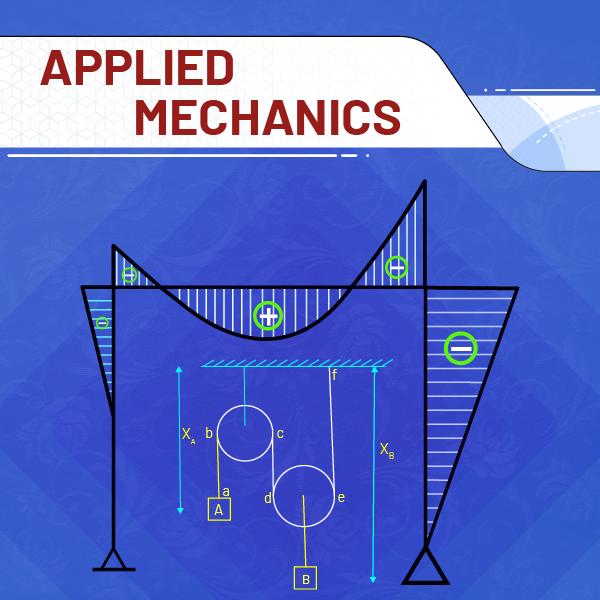
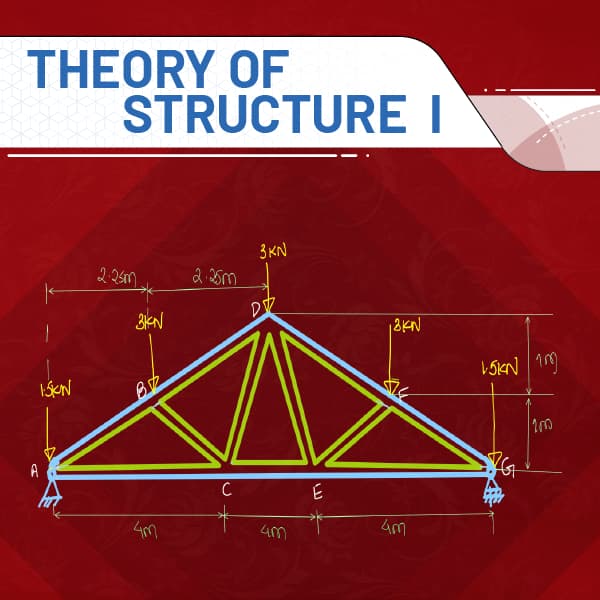
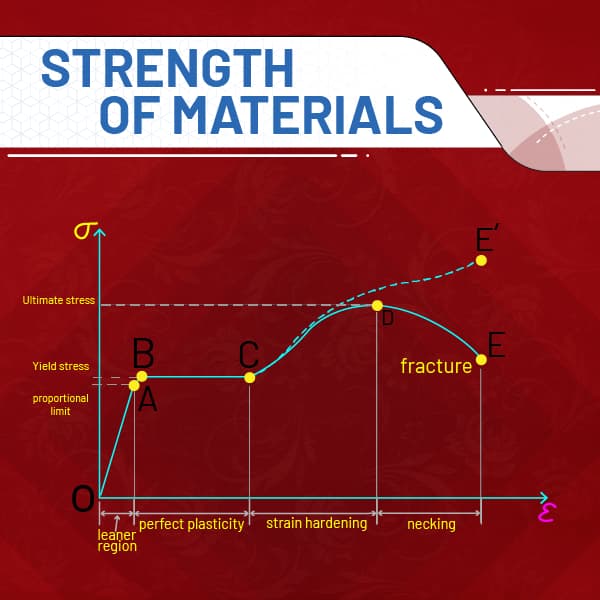
- "Students are required to have knowledge of Theory of Structures I, Applied Mechanics and Strength of Materials, based on syllabus of IoE "
Description
The videos herein are strictly based on syllabus of Institute of Engineering Tribhuvan University, Nepal promoting "e-Learning in Nepal" and are made with intention to provide guidance to the "Bachelor in Engineering(BE) appearing students", for securing good results. The course tries to cover all the lessons of Theory of Structures II. This course also includes frequently asked questions with solutions. We strongly believe that, viewers will be benefited from these videos and the thirst of curiosity of viewers will be quenched! Feedbacks and suggestion to improve are always welcome and highly appreciated!
Student Feedback
Reviews